Follow by Email

Saturday, 11 May 2013

WHERE IS THE UK'S FIGHTBACK?


Laurie Penny’s Guardian article, ”Where are the activists as austerity bites? They have been beaten back” asked an important question. Where is the UK’s fightback? Four days later Thatcher funeral mania swept the planet, and the piece was effectively buried. However, I believe it raised some vitally important points.

Its main thrust was that state repression was a key factor in suppressing resistance to the government’s cuts. The brutal physical assaults in 2010 on student protestors and the punitive trumped-up charges they then faced, the ‘cleansing’ of the Occupy movement from St Paul’s and the eviction of the Sussex University occupation were all evidence of the state using force and intimidation where it thinks fraud no longer works. The government understands that the programme it is pushing through is going to destroy the lives of many, and that there will be spontaneous revolts and rebellions, which it will attempt to crush or neutralise.

We should not be surprised at this. State suppression of popular protest is par for the course. The police killed schoolteacher and Socialist Workers Party member Blair Peach at an Anti-Nazi League protest against the National Front in Southall in 1979. No officers were ever charged. During parts of the 1984-5 miners’ strike coalfields were under police siege, with beatings, arrests and prison sentences commonplace. Evidence is only now emerging of the framing of miners by police after an attack by mounted police on strikers at the Orgreave coking plant in 1984. In 1990 it was police violence which sparked off the anti-poll tax riot which brought down Thatcher.

Yet in truth state violence is a secondary issue for those who want to resist austerity. If the Sussex occupation had been part of a national wave of protest the police would not have felt confident enough to break it up as they did. The state can only be unrestrained in its use of force where it does not fear the consequences. To the police, student protest is not like a trade union demonstration with workers linked together through their unions and workplaces, and, crucially, able to strike. Sometimes even police attacking students can backfire. In May 1968 police violence against protesting students in Paris sparked solidarity walkouts by disgusted workers and the biggest general strike in history.

Capitalism’s neoliberal turn was made under the impact of falling rates of profit. But it was only achieved by attacking solidarity. The 1972 battle of Saltley Gates saw the engineering workers of Birmingham deliver solidarity to UK miners in devastating style, winning the strike and setting the stage for the toppling of Tory PM Heath two years later. Once in power the Tories made solidarity action illegal. The cumulative effect of the anti trade union laws introduced in the 80s was a shift in the balance of power from shopfloor workers to the union leaderships, empowering them in the policing of their members and reinforcing sectionalism. When Thatcher said there was no such thing as society it was solidarity she was attacking.

Stuart Hall shows how market forces model institutional and private life by shaping “a popular culture that extols celebrity and success and promotes values of private gain and possessive individualism”. In the absence of a ‘counterculture’,  consumerism hollows out the opposition, and the depoliticisation of the ‘student experience’ was one effect of this. Corporations prioritised the demographic, reflecting for them the importance of shaping young people’s consumer patterns early. Student unions became tools of corporate marketing strategies, and student politics came to reflect this. At the same time the failure of the movement against fees meant that student debt forces modern students to seek paid work as well as study.  Paradoxically this creates conditions in which solidarity between students and workers might be easier to achieve. Most students are, indeed, now workers.

Less hidebound by tradition and less ground down, in the past students were sometimes the first to move. It was hoped by many in the UK that the 2010 student rebellion against fees would trigger wider resistance. This did not happen. The passivity was in part about fear of police repression, but such repression has been worse elsewhere and yet could not hold back resistance. Key to the lack of generalisation in the UK is, I believe, the fact that despite a rise in the number of defensive 1 or 2-day strikes in individual sectors, organised workers are not moving in a coordinated fashion. There is no political or industrial generalisation of resistance. This is not only an indication of the fear of unemployment and the impact of the defeats of the 1980s on workers’ confidence, it is also a measure of the dampening effect on struggle of the sectionalism of the trade union bureaucracy and the Labour party.

The British Labour party has for over 100 years been the primary organisation which managed discontent on behalf of the British ruling class. As Labour was establishing itself in the first two decades of the 20th century so the bureaucratisation of the trade unions was proceeding apace. This was part of a new employers’ strategy. British capitalists had accepted that the trade unions were not going away. They could not be simply repressed indefinitely: they had to be incorporated. In the same way that discontent would be politically managed through the Labour party, so it would be economically and industrially managed through a sectional and conservative-minded trade union bureaucracy.

The failure to resist the attacks on benefits and the NHS has cruelly exposed the inability of these organisations to effectively fight or to present an alternative. British trade unions are defensive organisations whose role is to negotiate the rate of workers’ exploitation, and have historically been sectional in structure and outlook. They represent a divorce of the economic from the political. This is partly due to the baleful influence of the Labour Party, which of all European social democratic parties is the one most wedded to electoralism. Its leadership’s strategy is at all times and in all places oriented on elections, not on organising resistance that the media might attack. The fact that by 2015 the cuts will be embedded and the damage done seems irrelevant to Labour: so irrelevant indeed that Ed Balls has stated that they won’t reverse the cuts.

The strategy of political triangulation involves steering between ‘left’ and ‘right’ and adopting some of the same policies of your opponents. It is quite acceptable apparently to continue to kick the people who vote for you in the teeth to ensure the fool’s gold of the mythical ‘middle ground’ is delivered: your core voters can safely be ignored because they have nowhere else to go. So, over time, you end up with three main parties whose policies are virtually identical. It is precisely this which has seen the numbers who bother to vote steadily declining, and politicians increasingly held in contempt. This is why the xenophobes of UKIP, rather than being laughed out of court, pose as ‘anti-establishment’ and win votes. This is why the pollster YouGov now says a Labour victory in 2015 is now ‘a distant prospect.’

Some like Owen Jones believe the Labour party can be won over to  radicalism. Others, like Ken Loach, believe Labour is irredeemable and a new vehicle needs to be developed. His nascent organisation is called ‘Socialist Unity’ but unity has been in short supply in the UK far left recently, which is the other factor that weakens resistance on our side. Respect has suffered a series of splits and splinters – the most recent over Galloway’s comments about the rape allegations against Julian Assange. The Socialist Workers Party has seen allegations of sexual assault against a leading member surface at conference, leading to expulsions, accusations of a cover-up and resignations. Depressingly, the most sectarian elements on the left have seen fit to indulge in a frenzy of Trot-bashing, but then some of the left is only happy when it is tearing the rest of the left apart. 

And it’s not just the Leninist left that’s having problems. The ‘networked individualism’ of the Occupy movement is also in crisis. Despite Laurie Penny’s belief that the energy and creativity of the ‘new wave of activists…is disseminated via networks rather than organisations’, the incapacity of networks to substitute for organisations has been cruelly exposed. Occupy’s often attractive version of democracy - consensus politics - was effective while the movement was moving forward. But when the police and media attacked, the movement was not sufficiently flexible or organised to defend itself. Curiously enough, allegations of rape at the London Occupy camp were also brought against a founder of the hacking group Anonymous. Although he was found not guilty, the media damage was done…

In addition, the weaknesses of loose, online campaigning are surfacing. The problem with online networking is that you can get a distorted sense of reality: you can overestimate numbers and commitment. An organisation or individual can get large numbers of people signed up to a campaign by not asking too much of them. Social networks are not effective in increasing motivation. They increase participation, but only by lessening the level of motivation that participation requires.  

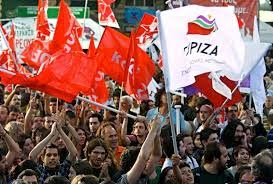
Perhaps Occupy can learn, after all, from the workers’ movement and the ‘old’ left. The traditional forms of campaigning and building resistance: meetings, rallies, mass demonstrations, leafletting and so forth, have not been superceded by online technology, but provide the base for it. Trade unions or overtly political organisations like the Syriza coalition in Greece or France’s Front de Gauche may well prove in the long run to be more effective in mobilising resistance than the ‘horizontalist’ model seen with the Occupy movement.

How the British left organises itself in electoral terms remains to be seen. But electoral politics is always only a reflection of the real struggle. We certainly can’t wait for Labour to maybe get elected (maybe not) only to find that it doesn’t change anything anyway. Real resistance in the present depends not on passive electoralism but on forces that can deliver direct action – trade unionists, students, grassroots campaigners, anti-fascists, socialists. We need to be organised and we need to be together. We need to avoid dissing each other’s modes of operation. We need to create unity in resistance. The fact that in Greece Syriza united separate groups under one electoral banner was a positive development. The British left has shown it can act in unity in the past – it needs to practise it in the present. Resistance to austerity will increase. Only a fraction of the cuts planned over the next ten years have begun to take effect. And if the left doesn’t benefit from this crisis, others will. The police aren't really the problem. The problem is trying to build a movement strong enough to defeat them. That's the real work. It’s time to get our act together.


Friday, 12 April 2013

DING-DONG! MARGARET THATCHER & THE POWER OF CARNIVAL


I want to defend the ‘Ding-dong Thatcher’s gone’ street parties and celebrations that have erupted in various towns and cities. Those in the Labour party and the ‘liberal left’ who criticise them for being ghoulish, sick, disrespectful and so on entirely miss the point. I want to argue they are not only necessary but a healthy reaction to the solemn media spectacle about to unfold. This spectacle, with its measured ceremonial and invocation of the armed might of the state, will strive to create myths, manufacture our consent, and set limits on the dialogue we are allowed to have about Thatcher, who she was and what she meant.    

Thatcher’s death marks an ending of sorts. It is a truism that, as she said,  her greatest accomplishment was Tony Blair and New Labour. I don’t want here to reiterate this problematic. One of the grisliest political photographs I have ever seen was of the wretched Brown posing with her outside Number 10.

Claims that she ‘saved’ the economy are incomprehensible. Her destruction of manufacturing and the shift to a ‘financialised’ economy via the ‘Big Bang’ and bank deregulation hugely facilitated the pursuit of debt-driven growth, all of which hastened the crash. It is also arguable that the weakening of the unions’ bargaining muscle in Britain was the crucial factor which kept down wages, so that cheap, easy credit – debt, actually – flowed in to fill the gap. Combine this with an acute shortage of affordable housing (a consequence of her Right-to-Buy schemes) and you create the conditions for the out-of-control housing market and then in the US the sub-prime mortgage collapse which was the trigger for global recession.

So please don’t claim Thatcher ‘saved’ the economy: quite the contrary. What she achieved was the artificial stimulation of financial ‘bubbles’ which eventually imploded. In addition, the neoliberal shift, which she pioneered, has made the world economy hugely more vulnerable to shocks. But Thatcher’s real achievement, (apart from New Labour) was to restructure British society in the interests of the rich and powerful, so that an increasingly small amount went into the ‘social wage’ and much huger amounts into the pockets of the already very rich.

The polarisation which her funeral is creating is a class polarisation. The British ruling class understands this very well. But it owes her much, which is why it is pushing ahead with what is to all intents and purposes a state funeral. It understands the power of symbolism and ceremonial, but it also knows it is entering a period of potentially profound social conflict. It is attempting to use the symbolism of national unity to disguise the havoc it intends to wreak on working-class communities. This is a high-risk strategy which can easily backfire. The Telegraph has expressed its unease that the ceremonial of the state is being hijacked by the Tory party.

The problem faced by those Tories who wish to establish the Thatchercult is the inconvenient truth about the sheer number of people who have suffered at her hands. The focus of most professional politicians and media outlets on London and the South-East means that the thousands of ex-miners and their families  - the ‘enemy within’ - have been forgotten. As have the millions of manufacturing workers, printers, steelworkers and many others, thrown on the dole. And the Irish republicans who supported Bobby Sands and the hunger strikers when Thatcher denied them political status. And the black communities of Brixton and Toxteth which went up in flames in 1981 against her racist policing. And the gay and lesbian people who had seen the odious Section 28 drive gay awareness out of the education system, legitimising homophobia.

The fact is, among ordinary working people, Thatcher made life worse for so many that it is futile for the British establishment to try to pretend otherwise. One of the most heartening things about the street parties in Brixton, Glasgow and everywhere else was the sight of so many young people there, dancing and popping champagne corks . It is good to see radicals and socialists acting as the memory of the class. My son spent his early years yelling ‘Maggie Maggie Maggie Out Out Out’  often while sitting on my shoulders on a variety of anti-government demonstrations. His was the first text I received after her death. It said simply ‘Ding Dong the Witch is Dead’. You cannot eradicate these sorts of things from history. In the memories of millions of people they come together to constitute almost a social force. 

It was the street parties, bursting forth in city after city, drawing outrage from the political establishment, that made the social and political expression of these feelings possible. I am sure that, had it not been for this, the establishment would have had a much easier time creating the solemn monolithic hagiography around the remains of the blessed Margaret that it wanted. It was this very visible expression of dissent that helped give Glenda Jackson the confidence to hurl her splendid critique of Thatcher in the teeth of the apoplexic Tory front benches. 

The Tory media-establishment needs to understand that, ultimately, the celebrations tap into a power that is deeper than theirs. The ‘Thatcher’s Dead’ parties have their roots in the carnivalesque. Mikhail Bakhtin‘s 'carnival' is a form that erupts from unofficial sources, subverting the solemnity of the ‘official’ forms of power and control. Using whatever is playful and grotesque, it turns the world upside down, crowning jesters instead of kings. Its humour and bad taste subvert the solemnity of ‘official’ discourse and ‘official’ politics. 

When an ageing tyrant dies and is being prepared for a solemn funeral, it cries ‘Rejoice!’ As the nation is dragooned into mourning, it parties. As the state prepares to create awe among the population by means of military parades, it blows a fart. The ‘Thatcher’s Dead’ parties not only express widespread popular hatred of what Thatcher did to our society and what her heirs wish to continue and extend, they challenge the truth of the ‘official’ media narrative and give a voice to the unheard. It remains to be seen, as London is flooded with troops over the next few days, determined to push through a highly contested state ceremony, to what lengths a beleaguered British state is prepared to go to ensure its version of history dominates.   

Monday, 8 April 2013

DING DONG


So you’re finally dead, you old bastard.
Despite the rumours, and the false alarms on Twitter
This time it was true.

It put me in mind of such a lot
But most of all made me think of a friend of mine
Who I wish could have seen this day.

When I first met John Wangford
He was a shop steward in a Hertfordshire hospital.
A porter, doing a dirty job for low pay.

He had a good, creative head on him, he hated injustice and one of the things he was good at was organising at work.

While he was there the porters became notorious as a stroppy bunch of bastards
Who would walk out at the drop of a hat.

And he’d be there on the picket line, in the pre-dawn light, white coat on, drawing on his roll-up, his John Lennon glasses (he was blind as a bat) glinting in the firelight of the brazier (yes, brazier!) as he warmed his hands.

In fact, Maggie, you nearly came face to face with him.

In ‘81 you were scheduled for a visit to St Albans hospital
To open a ward which had been built by private subscription.

John was outraged first because it was you
And second because the ward was being built with private money.

At risk to his own continued employment,
He leaked the information of your visit.
At less than a day’s notice a reception committee was formed
And by 8am was waiting for you at the hospital gates.

You may have been dimly aware of hubbub
Behind police lines as your Daimler swept into the hospital
But as you left a half-hour later you cannot have failed to notice
The tall guy in the white uniform, with spiky peroxide hair
And an assortment of earrings, who broke the police line
And chased your car up the road, waving his fist.

That was John.

In fact, his size and his hair made him
Highly identifiable at demos. As the miners’ strike was
Being smashed down the toilet by your bully-boys in early ‘85
One of the London marches was broken up by police attacks.

The national 6 O’Clock News led off with footage of John, spiky hair bristling as he yelled ‘Scab!” at a tentative-looking line of riot police.

But don’t get the wrong impression. He wasn’t a headbanger. 
He loved reading. He knew his Gramsci. 
I never saw him once being macho or aggressive. In fact his general politics were impeccable. He was a mine of information on reggae and ska. He once gave away all his Yellowman LPs as a protest at the artist's homophobia. At the Notting Hill carnival while taking an unwise and probably somewhat drunken piss in a side-street, he was robbed by a group of black teenagers who sprayed mace in his eyes. He was interviewed by a local newspaper after leaving hospital, clearly angling for a racist rant. He gently stressed that you couldn’t possibly turn this into a racist thing. Most of the A & E staff who had taken such good care of him were also Afro-Caribbean, so how could you?  


Time passed
Life drifted us apart like leaves  
Different places
Different spaces
Different lives

A couple of years ago I heard he was dying
At 48
From skin cancer.
A few days before receiving the diagnosis
He'd been told he was losing his teaching job
From the start of next term.
We spoke on the phone a couple of times
He'd been writing constantly. 
He e-mailed me what he'd done.
I put it up on the net.
I was going to go up and see him
At the weekend.
But then his sister rang
To tell me he had gone.
I went up to the funeral.
Sometimes, if I'm doing 
A public poetry reading
I read the words he wrote
In those last days.

He was, in your terms, Thatcher
And in the minds of your friends
A nobody...
A hospital porter…
A trade unionist…
A teacher…
A good man
Struggling to survive in a shitty world.
But the values he espoused
Were better than the values of you and your kind.

And as you go to your grave
With all the pomp and circumstance that money can buy 
Surrounded by an honour-guard of hundreds of armed men
Jet fighters and all the paraphernalia of death
Just let me say this:
We lost much, much more in John's passing
Than we ever will 
In yours.